Cardamom & Earl Grey Banana Bread

4.9 ✓ Thanks!
Serves8–10 slices
Prep Time

20 mins


Total Time

75 mins

Bake
DifficultyBeginner
Recipe by Anna Ramiz Pastry Chef

Anna is a pastry chef and writer bringing her kitchen stories to life through seasonal, memory-rich recipes.

Cardamom & Earl Grey Banana Bread

About This Dish

This banana bread gets its character from two infusion techniques that happen before the batter is even mixed. First, whole cardamom pods get gently smashed and steeped in melted butter for fifteen minutes - the butter extracts the cardamom's essential oils and becomes the bread's primary fat, carrying that warm, camphor-sweet flavor into every crumb. Second, loose Earl Grey tea leaves go directly into the sugar along with orange zest, where the mixer's paddle grinds the tea into the sugar crystals and releases the bergamot oil alongside the citrus oils. By the time you add the flour, the two aromatics - cardamom through the fat, bergamot through the sugar - are already woven into the batter at a structural level, not just sprinkled on top.


The batter uses a separated-egg technique that's unusual for banana bread. The yolks go in with the wet ingredients for richness, but the whites get whipped to medium peaks and folded in at the end. This lifts the crumb without making it cakey - the bread stays moist and dense from the bananas and sour cream, but the whipped whites give it a lighter, more open texture with a slightly tender top. The turbinado sugar scattered on top before baking creates a thin, crackly crust that contrasts with the soft interior. It's a more refined loaf than most banana breads, but it's still banana bread — it still needs overripe bananas, it still takes an hour in the oven, and it still fills the kitchen with that smell.


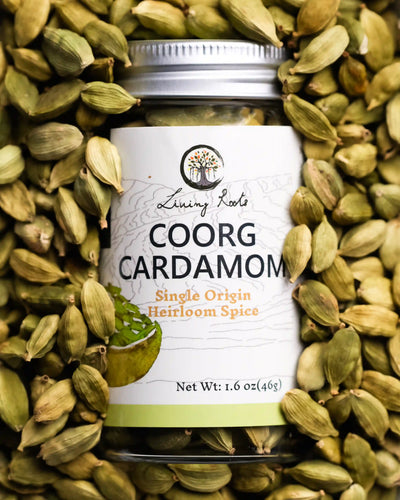
This recipe uses Coorg Cardamom from the hill plantations of southern India. The pods are smashed and steeped whole in the butter rather than ground, which produces a cleaner, more aromatic cardamom flavor without any gritty powder in the crumb. Combined with Earl Grey's bergamot and fresh orange zest, the bread has three distinct floral-citrus layers that complement the banana's sweetness rather than competing with it. It's good warm from the oven, better the next morning, and excellent sliced thick and toasted with butter.

Ingredients

  • ½ cup (113 g) unsalted butter
  • 1 tbsp Living Roots Coorg Cardamom pods
  • ½ cup (100 g) granulated sugar
  • ½ cup (100 g) brown sugar
  • 1 tsp orange zest
  • 1 bag Earl Grey tea
  • 2 large eggs, separated
  • 1 tbsp vanilla extract
  • 3 large ripe bananas, mashed
  • ⅓ cup (70 g) sour cream
  • 1¾ cups (225 g) all-purpose flour
  • 1 tsp baking soda
  • ½ tsp baking powder
  • 1 tsp kosher salt
  • 1 tbsp turbinado sugar (for topping)

Instructions


  1. Preheat the oven to 350° F and line a 9x5” loaf pan with parchment paper, leaving about an inch of overhang on each side. 

  2. Use the flat side of a knife to gently smash the cardamom pods and place them in a small saucepan with the butter. Cook over medium low heat until butter is melted. Remove from heat, cover, and let steep for about 15 minutes, while you prepare the rest of the ingredients. 

  3. In the bowl of a stand mixer fitted with the paddle attachment, combine sugar, brown sugar, orange zest, and the loose earl grey tea from the tea bags. Remove the cardamom pods from the butter and discard them, then add the melted cardamom butter to the bowl. Cream on medium speed for 1-2 minutes, until well-combined and sandy in texture. 

  4. Add the egg yolks, vanilla, mashed bananas, and sour cream and mix again for another minute or two until well-combined. 

  5. Add the flour, baking powder, baking soda, and salt and mix again on low speed until the batter is smooth and no dry spots remain. 

  6. In a clean bowl, whip the egg whites to medium peaks. Add the whipped egg whites to the batter in two additions, folding gently with a rubber spatula until there are no remaining streaks of egg whites. Transfer the batter to the prepared baking pan and sprinkle the top with the turbinado sugar. 


This Recipe Features

Ways to Make It Your Own

Chai-Spiced Banana Bread

Replace the Earl Grey tea with the contents of two chai tea bags (or a teaspoon each of ground cinnamon, ground ginger, and a pinch of ground cloves). Keep the cardamom butter steep as written — cardamom is already a core chai spice, so it ties everything together. This version swaps the floral bergamot note for the warm, gingery spice profile of masala chai. The orange zest can stay or be swapped for a teaspoon of fresh grated ginger for a spicier, less citrusy loaf. This is a good fall and winter variation that leans into warming flavors.

Brown Butter Banana Bread

Instead of simply melting the butter and steeping the cardamom, take it a step further: cook the butter over medium heat until the milk solids turn golden brown and it smells nutty (about 5–6 minutes), then add the smashed cardamom pods and steep as written. The browned milk solids add a toasted, toffee-like depth that pairs beautifully with the ripe banana and brown sugar. Watch carefully — the window between browned butter and burned butter is about 30 seconds. The extra step adds five minutes to the process and a significant amount of flavor depth to the finished loaf.

Banana Bread Muffins

Divide the batter between 12 lined muffin cups, filling each about three-quarters full, and sprinkle the turbinado sugar on top of each. Bake at 350°F for 18–22 minutes instead of the full loaf time. The muffins have a higher crust-to-crumb ratio, which means more turbinado crunch and more caramelized edges per bite. They also cool faster, freeze in individual portions, and are easier to share or gift. The folded egg whites make the muffins slightly domed and tender on top. Everything else — the cardamom butter, the Earl Grey sugar, the banana and sour cream — stays identical.

Gluten-Free Version

Replace the all-purpose flour with an equal amount of 1:1 gluten-free baking flour (Bob's Red Mill or King Arthur are consistent). The mashed banana and sour cream provide enough moisture and binding that the gluten-free flour works without major adjustments, though the crumb will be slightly denser and more tender. The separated-egg technique is especially helpful here — the whipped whites compensate for the structure that gluten would normally provide. Fill the loaf pan to the same level and bake for the same time, checking a few minutes early since gluten-free batters can set faster at the edges.

Why These Ingredients Matter

Coorg Cardamom

Sourced from the hill plantations of Coorg in southern India, these green cardamom pods have an intense, camphor-edged sweetness with a cooling eucalyptus note. In this recipe, the pods are gently smashed with the flat of a knife - just enough to crack them open and expose the seeds — then steeped in melted butter for 15 minutes. The butter acts as a solvent, extracting the fat-soluble essential oils from the cardamom and infusing the bread's primary fat with a clean, aromatic flavor. Steeping whole pods and discarding them produces a subtler, more elegant result than adding ground cardamom powder directly to the batter, which can taste dusty and leave gritty specks in the crumb.

Earl Grey Tea

The tea leaves go directly into the batter - not steeped in liquid, but emptied from the tea bags and mixed into the sugar where the paddle grinds them fine. Earl Grey is a black tea scented with bergamot oil (extracted from the rind of a bergamot orange), and that bergamot is the flavor that matters here. It adds a floral, slightly bitter citrus note that's distinct from the fresh orange zest and complements the cardamom. Use a quality loose-leaf Earl Grey or a brand with strong bergamot presence (Twinings and Ahmad are reliable). Cheap Earl Grey with weak bergamot scenting won't contribute enough flavor to register against the banana and butter.

Bananas

Use very ripe bananas - the skin should be heavily spotted brown or almost entirely black. Ripe bananas have converted most of their starch to sugar, which means they're sweeter, more aromatic, and mash into a smooth puree that integrates evenly into the batter. Green or barely ripe bananas are starchy and bland, and they produce a bread that tastes more like flour than fruit. Three medium bananas is the right amount for a 9x5 loaf. If your bananas aren't ripe enough, bake them unpeeled on a sheet pan at 300°F for 15–20 minutes until the skins blacken — this accelerates the starch-to-sugar conversion and produces a workable, sweet banana for mashing.

Sour Cream

The sour cream adds moisture, fat, and a gentle tang that balances the bread's sweetness and enriches the crumb. Its acidity also activates the baking soda, contributing to the rise. Full-fat sour cream works best — reduced-fat versions contain stabilizers that can affect the texture. Greek yogurt is a functional substitute if you don't have sour cream on hand; it's slightly thicker and tangier, so the bread will be marginally denser and more acidic, but the difference is subtle. The combination of sour cream and mashed banana is what keeps this bread moist for days rather than drying out after 24 hours.

Separated Eggs (Yolks and Whipped Whites)

Separating the eggs and whipping the whites is the technique that sets this banana bread apart from most recipes. The yolks go in with the wet ingredients and provide richness, emulsification, and golden color. The whites get whipped to medium peaks - stiff enough to hold their shape but not so stiff they're dry - and folded into the finished batter in two additions. The whipped whites introduce air pockets that lighten the crumb without making it fluffy or cakey. The result is a banana bread that's moist and dense but not heavy — it has a slight tenderness and lift that most banana breads lack.

Tips & Storage

Don't Rush the Cardamom Butter Steep

Fifteen minutes is the minimum. The smashed cardamom pods need time to release their essential oils into the melted butter, and cutting the steep short produces a butter that smells faintly of cardamom but doesn't taste like much once it's baked. Cover the saucepan while steeping - this traps the volatile aromatics in the butter rather than letting them evaporate into the air. The butter should smell distinctly of cardamom when you lift the lid, and it'll have taken on a very slightly greenish tint. Fish out all the pods before adding the butter to the mixer; any pod left behind will be an unpleasant surprise in a slice of bread.

Fold the Egg Whites Gently

The point of whipping the whites is to introduce air into the batter, and aggressive folding pushes that air right back out. Add the whipped whites in two additions: stir the first third in vigorously (this sacrificial addition lightens the batter so the second fold is easier), then fold the remaining whites in gently with a rubber spatula - cut down through the center, sweep along the bottom, fold up and over, rotate the bowl a quarter turn, repeat. Stop when you can't see any more white streaks. A few small wisps of white are better than a deflated batter.

Bake Low and Slow - Check Early

This is a moist, dense batter with mashed bananas and sour cream, and it takes longer to bake through than a standard banana bread. Start checking at 50 minutes with a knife or skewer inserted into the center — it should come out with a few moist crumbs attached but no wet batter. If the top is browning too fast (the turbinado sugar caramelizes quickly), tent loosely with foil for the last 10–15 minutes. The bread continues to set as it cools, so pulling it slightly underdone in the center produces a moister loaf than waiting until the skewer comes out perfectly clean.

Storage - It's Better on Day Two

The cardamom and bergamot flavors meld and deepen overnight, and the crumb absorbs the banana moisture more evenly. Wrap the cooled loaf tightly in plastic wrap and store at room temperature for up to 4 days. Sliced bread can be toasted, which is arguably the best way to eat this - the heat re-activates the cardamom butter and Earl Grey aromatics and the turbinado crust gets a second round of caramelization. The loaf freezes well for up to 2 months; wrap in plastic then foil, thaw at room temperature, and refresh in a 300°F oven for 10 minutes if you want to restore the crust.

Frequently Asked Questions

Can I use ground cardamom instead of steeping pods in butter?

You can, but the flavor will be different. Ground cardamom added directly to the batter tastes more pungent and slightly dusty, and it leaves visible specks in the crumb. Steeping whole smashed pods in butter produces a cleaner, more aromatic cardamom flavor that's distributed through the fat rather than concentrated in powder form. If you only have ground cardamom, use about half a teaspoon added to the sugar along with the tea and orange zest — it won't be identical, but it'll still taste good.

What kind of Earl Grey tea should I use for banana bread?

Use a brand with strong bergamot scenting — Twinings, Ahmad, and Harney & Sons are reliable choices. The tea leaves go directly into the batter (not steeped in liquid), so the bergamot oil concentration matters. Cheap or generic Earl Grey with weak bergamot scenting won't contribute enough flavor to register against the banana and butter. If using loose-leaf rather than tea bags, measure about 2 teaspoons of leaves. Avoid Earl Grey blends with added lavender or vanilla unless you want those additional flavors in the bread.

Why whip the egg whites separately for banana bread?

Whipping the egg whites to medium peaks and folding them into the batter introduces air pockets that lighten the crumb without making the bread fluffy or cakey. Standard banana bread, where whole eggs are mixed in directly, tends to be dense and heavy. The separated-egg technique gives this version a lighter, more open texture while keeping the moist, rich character that banana bread should have. The key is gentle folding — vigorous stirring deflates the whites and defeats the purpose.

How ripe do the bananas need to be?

Very ripe — the skins should be heavily spotted brown or almost entirely black. At this stage, the bananas have converted most of their starch to sugar, making them sweeter, more aromatic, and easier to mash into a smooth puree. Green or barely spotted bananas produce a starchy, bland bread. If your bananas aren't ripe enough, bake them unpeeled at 300°F for 15–20 minutes until the skins blacken — this accelerates the starch-to-sugar conversion and works as a same-day substitute for naturally ripened bananas.

Why Our Spices Make a Difference

Every spice in this recipe comes from a farmer we know by name. Lab-tested for purity, harvested at peak season, and shipped within weeks, unlike the years it takes for grocery stores to stock their spices. Meet our farmers

Lab Tested Direct Trade Single Origin
Published March 27, 2025 Updated February 12, 2026
Coorg Cardamom