Your cart is empty.
Have an account? Log in to check out faster.
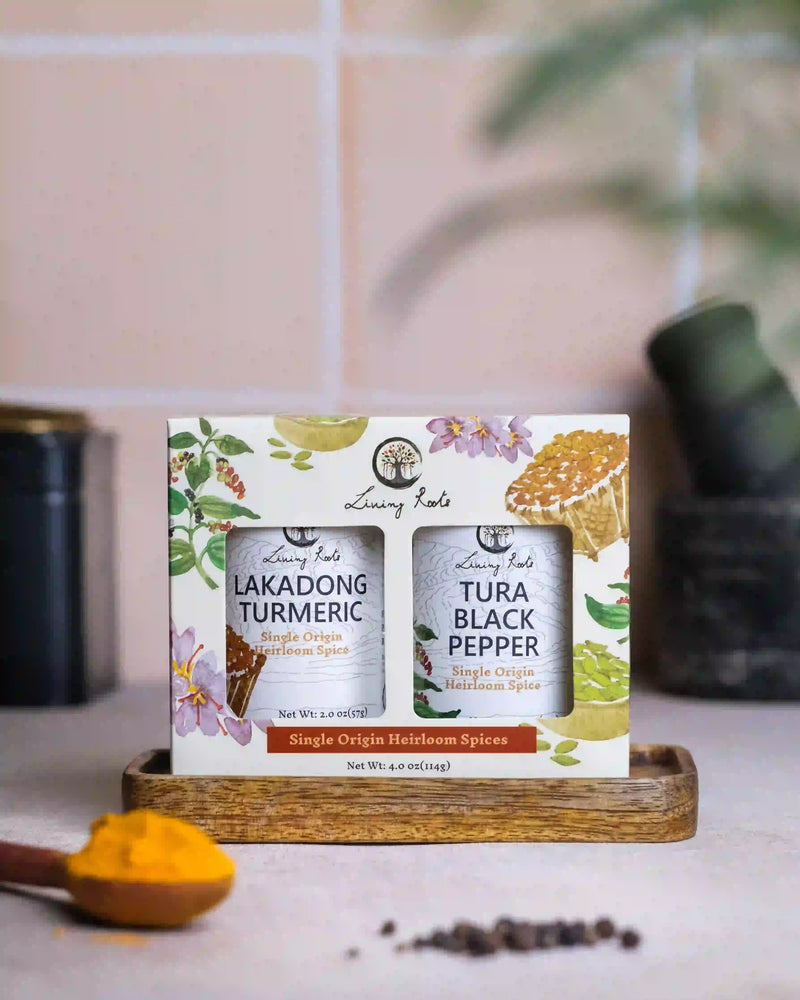
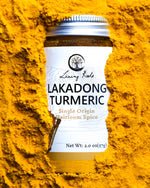
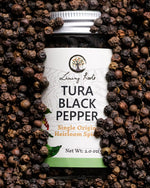
Turmeric without pepper is half a dish.
Turmeric deepens. Black pepper brings it to life.
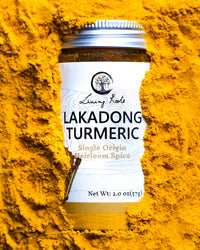
Deepens. Colors. Warms.
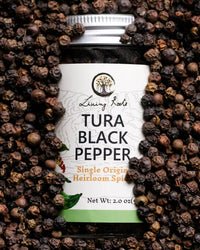
Lifts. Sharpens. Activates.
The science confirms what Indian kitchens have always known: piperine in black pepper increases curcumin absorption by up to 2,000%.
Wherever you use turmeric, add pepper. Always.
Warm milk, turmeric, pepper, honey. Two minutes.
Add both early - turmeric for color and depth, pepper for heat and lift.
Mix with oil, garlic, and salt. Works on vegetables, chicken, and fish.
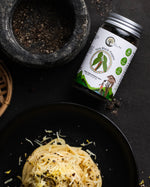
A pinch of each into scrambled eggs. The easiest way to use both every day.
Turmeric builds the base. Black pepper brings it to life.
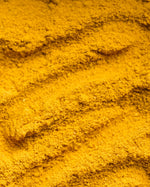
On its own, turmeric is warm, earthy, and grounding — it deepens a curry, colors a golden milk, anchors a spice rub. But on its own, it stays incomplete. Add black pepper, and the dish opens up. The flavor sharpens. The whole thing feels complete.
This isn't a trend. It's how turmeric has always been used in serious cooking.
From the high-altitude Jaintia Hills of Meghalaya, where volcanic soil and monsoon rains produce rhizomes with exceptional curcumin levels. Grown by Edwina Lamare and P. Nongdkhar, whose families have tended these fields for three generations. Lab tested at 7.61% curcumin — over 3× the grocery store average.
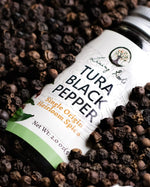
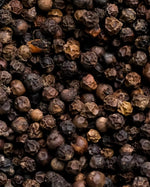
Wild-harvested from jungle vines in the Garo Hills of Meghalaya — no trellises, no plantations, just forest canopy and generations of cultivation. Grown by Dimse D. Shira. Bold, floral, with citrus top notes only wild-grown pepper delivers. Lab tested at 5.54% piperine — nearly double the standard.
The science confirms what Indian kitchens have long known: piperine in black pepper increases curcumin absorption by 2,000%. But the real reason to use them together is simpler than that.
They just taste better that way.
Grown in

Meghalaya — "abode of clouds" — sits at 4,000ft where heavy monsoons and acidic soil produce aromatic spices.

Edwina Lamare walks to her family's fields in Lakadong village, where 'Shynrai Lakadong' — as it's called in Khasi — has been cultivated for three generations.

The Lamare and Nongdkhar family grows turmeric organically in the Jaintia Hills — no fertilizers, just mountain soil and knowledge passed down through generations.

Each rhizome is sliced by hand and sun-dried slowly to preserve the deep golden color and 7.61% curcumin that Lakadong is known for worldwide.

Dimse D Shira tends pepper vines in South West Garo Hills — a legacy passed from her grandmother to her mother, and now to her.

Black pepper vines climb tall rainforest trees in the Garo Hills. No trellises, no plantations — just jungle canopy and generations of knowledge.

Each harvest is hand-picked from wild vines. This year yielded 17 kilos of peppercorns with the bold, floral character that only forest-grown pepper can deliver.
Two spices. Two farmers. One ancient synergy - now lab-verified.