Your cart is empty.
Have an account? Log in to check out faster.




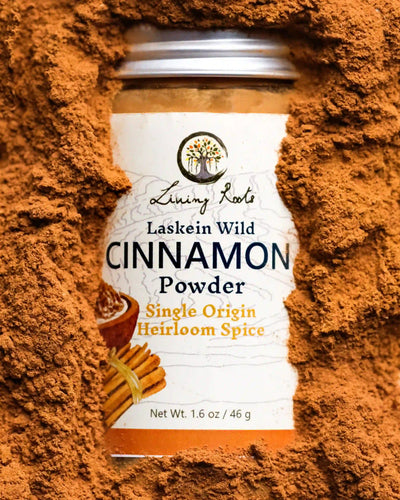
Wild-foraged from near rain forests. Untamed aroma, impossible depth.
In the ancient forests of Laskein, deep in Meghalaya's Jaintia Hills, Ribaitki Langstang continues what her grandmother started with a single cinnamon tree. That tree dropped its seeds, and over three generations the family has nurtured them into a small plantation, grown wild without pesticides, the way it has always been done here.
You'll taste the difference immediately: forest bark, sweet cedar, a hint of wild honey. Lab-tested at over 4x the volatile oil of standard cinnamon — this is what the spice was meant to be before industrial processing stripped it down.
Stir into your morning oatmeal or coffee for instant warmth. Add a pinch to chai with cardamom, or dust over baked apples and pastries. Works beautifully in savory dishes too: try it in Moroccan tagines, biryanis, or a slow-cooked stew.
 Cinnamon
 Cinnamon



The classic warming duo — perfect for chai, baking, and rice dishes
Laskein, Meghalaya, India

Grown in

Meghalaya — "abode of clouds" — sits at 4,000ft where heavy monsoons and acidic soil produce aromatic spices.

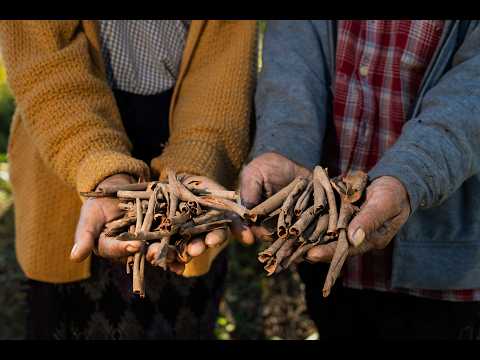
Ribaitki Langstang and her family sort freshly harvested cinnamon bark in Laskien, continuing a tradition her grandmother started three generations ago.

Hands that know the craft — wild cinnamon bark harvested from trees growing naturally in the forests of Laskein, Jaintia Hills. These aren't grown in large plantations and they dont use pesticides.

A wild cinnamon tree in the ancient forests of Meghalaya's Laskien. The reddish inner bark visible through the weathered exterior is where that 4x volatile oil potency begins.